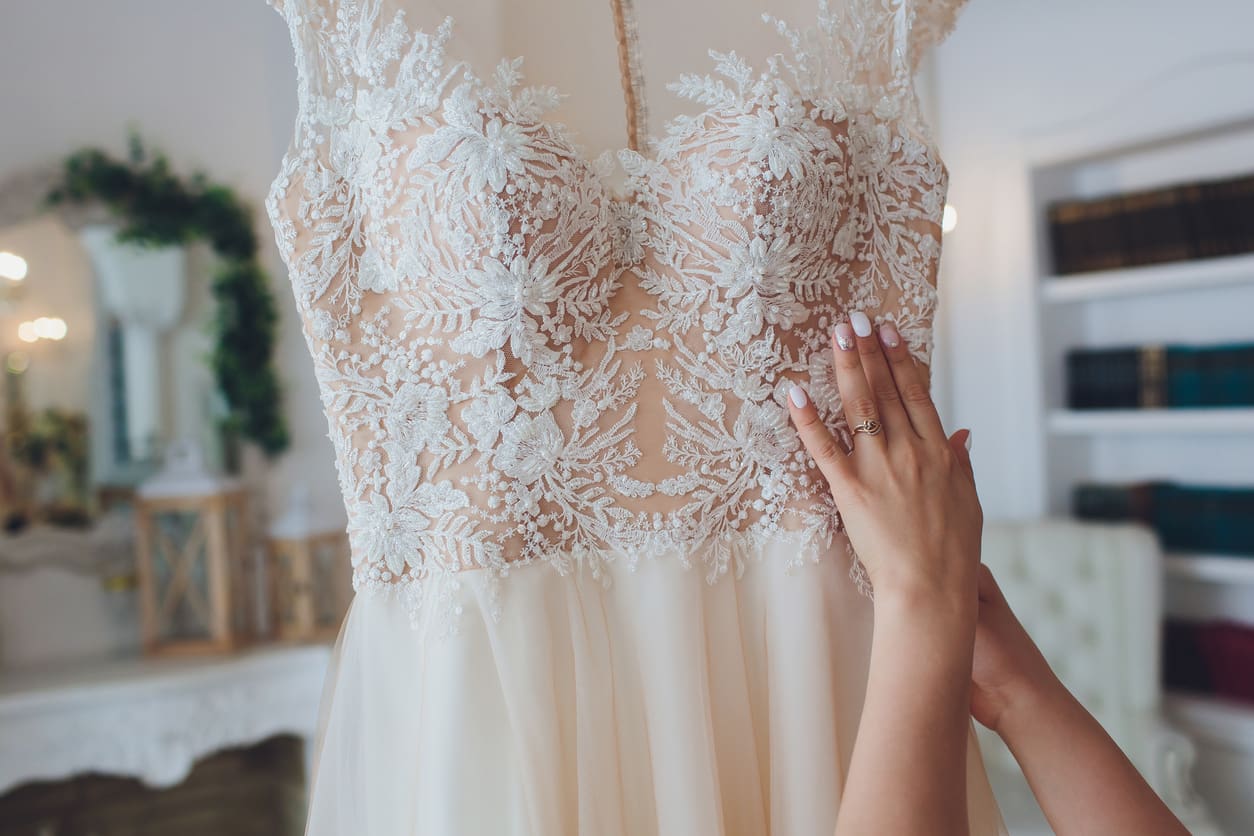
The wedding is over. The dress is hanging in a bag somewhere, maybe the closet, maybe the spare room. It looks perfectly fine. A little wrinkled, maybe. But clean. That’s exactly the problem.
Perspiration, body oils, champagne, and makeup leave no visible trace in the first days after the wedding, but the compounds behind them are already reacting with the fabric. The yellowing, the staining, the weakened fibers – none of that shows up right away. It shows up months later, after the window to prevent it has already closed.
That's why wedding dress cleaning and preservation isn't something to consider after signs of deterioration emerge. It's a proactive step that helps protect your dress while it's still in excellent condition. This guide explains why timing matters and what every bride should know about preserving a wedding dress for the future.
A typical wedding day is eight to 12 hours in a structured dress, with constant contact between the fabric and skin, food, drinks, and other people. Almost none of what transfers to the dress looks like anything at the time.
Even in a cool venue, sweat is absorbed at the underarms, back, and waist wherever the dress contacts skin directly. It’s colorless when fresh.
Every hug, dance, and hand at your waist transfers natural oils into the fabric at the neckline, waist, and bodice.
Champagne, sparkling water, cake, and desserts leave no visible trace when they dry. This is the one that catches most brides off guard. Clear liquid feels like nothing happened. But sugar oxidizes and caramelizes over weeks, producing yellow discoloration that wasn’t visible at all on the wedding day.
Foundation, blush, and bronzer at the neckline and bodice transfer from application and wear throughout the day. Light at the time of transfer, visible later.
The dress looks clean because all of these are invisible within the first few days. But the oxidation process has already started.
Fresh organic compounds – sweat, sugar, oils – don’t discolor fabric immediately. They discolor it during oxidation, which happens gradually over weeks. A dress with no visible soiling on the wedding night can have measurable yellowing by week six. The absence of visible staining right after the wedding is not evidence that the dress is clean.
This is what an untreated dress goes through from the day it comes off until the damage becomes permanent.
Oxidation is underway but not yet visible. Body oils and perspiration compounds are beginning to bond to the fibers. Sugar compounds have started the caramelization process.
Light yellowing may appear at the highest contact areas – underarm seams, waist, and neckline. What looked like white fabric starts to shift toward ivory or yellow in those spots.
Yellowing is more defined and visible in normal lighting. Fabric fibers in heavily soiled areas begin to weaken from continued exposure to organic compounds. Hem soiling – fine grit and floor debris – is now embedded in the fabric structure.
Some oxidation-based staining becomes partially set and may not fully respond to professional pretreatment. Wedding dress cleaning and preservation at this stage still stops further deterioration, but some discoloration may be partially permanent.
Illinois summers are humid, and humidity accelerates oxidation in fabrics that aren’t stored in a climate-controlled environment. A dress stored in a plastic bag in a spare room, not a temperature-controlled closet, may show visible yellowing on the earlier end of these intervals. In the Fox Valley area, where summer humidity is consistent, this matters more than brides typically expect.
Wedding dress preservation isn’t a single step. It’s a three-part process, and each part addresses a different layer of what the wedding day deposited in the dress.
This is the step that prevents yellowing, not the cleaning cycle itself. Perspiration, body oils, sugar compounds, and makeup are each addressed individually through targeted pretreatment. A machine cycle alone can’t do this.
After pretreatment, the main cleaning process removes what’s been lifted, along with hem soiling, general wear residue, and accumulated soil from a full day of wear.
After cleaning, the dress is folded with acid-free tissue and placed in pH-neutral archival materials that:
What preservation at this stage achieves: A dress brought in within the first four to six weeks after the wedding, in good condition, should look comparable to how it looks today, decades later. That’s the standard the process is designed to meet.
What it doesn’t guarantee: A full reversal of staining that has already been set isn’t always possible. The earlier the dress comes in, the more of its original condition can be preserved.
Not ready to book today? There’s one thing to do right now that makes a real difference.
If the dress is in a plastic dry cleaning bag or any sealed plastic storage bag, take it out. Plastic traps moisture and heat and off-gassing compounds that interact with fabric chemistry, all of which accelerate oxidation.
Replace it with:
The dress needs to breathe. It should not be sealed.
Where to store it:
Where NOT to store it:
These steps slow the process. They don’t stop it. The only thing that stops it is professional pretreatment.
Within the first 4 to 6 weeks, a professional Wedding Dress Cleaning and Preservation Service can stop deterioration completely and protect the dress for decades to come.
At Geneva Cleaners, we’ve been caring for wedding dresses and heirloom garments for over 50 years. Our preservation process addresses what a standard cleaning cycle can’t: targeted pretreatment for perspiration, body oils, sugar compounds, and makeup, followed by archival boxing that protects the fabric from humidity, light, and time.
Bring in the dress and let us take a look. The sooner it comes in, the more we can protect your dress.