That blazer has been sitting in your closet for three months. You know it needs cleaning, but you are not sure if it can go in the wash, and dropping it off somewhere unfamiliar keeps getting pushed to the bottom of the list. In the meantime, you just do not wear it.
Most first-timers do not avoid dry cleaning because it seems difficult. They avoid dry cleaning because they do not know what to expect, and nobody wants to hand over an expensive garment without understanding what happens to it.
This guide gives you everything you need to walk in prepared on your first dry cleaning visit and walk out confident.
The information you bring to the counter matters as much as the clothes themselves. Dry cleaners are skilled professionals, but they rely on you to fill in the gaps they cannot see. A few minutes at home before you go shapes the entire outcome.
The care label tells the cleaner the fiber content and the manufacturer's recommended cleaning method. A label that reads "dry clean only" means the fabric or construction is not suited for water-based washing. A label that says "dry clean" without the word "only" typically means professional cleaning is recommended but not strictly required.
Do not remove care labels before taking in garments. If a label is already missing, say so at the counter. An experienced technician can usually identify the fiber content by feel and adjust the cleaning method accordingly, but they need to know the label is gone so they can take that extra step.
Turn garments inside out before you leave home and check seams, collars, cuffs, and underarms. Stains that are invisible on dry fabric can become permanent if they go through a cleaning cycle without pretreatment.
At drop-off, point out every stain you can see, even faint spots, and tell the cleaner what caused it. Red wine, oil, coffee, and ink each respond to different spotting solutions. A stain identified up front receives the right treatment. One discovered after cleaning may not come out at all.
Run your hands through every pocket before handing anything over, including interior and hidden areas. A forgotten tissue shreds in the cleaning machine and sticks to everything. Lip balm melts and creates new stains. Coins, keys, and pens can snag fabric or damage other garments in the same load.
Remove anything that is not sewn directly into the garment: belts, brooches, removable shoulder pads, detachable collars, or cuffs. These items do not hold up well during cleaning and are safer left at home.
Check for loose buttons, open seams, or worn areas around pockets and cuffs. Point these out when you hand over the garment and confirm whether you want them repaired. If a button falls off during cleaning and you never mentioned it was already loose, there is no way to know whether cleaning caused it. Most dry cleaners handle basic repairs alongside cleaning, and it is worth asking while you are already there.
Despite the name, dry cleaning is not entirely dry. It uses liquid solvent instead of water to dissolve oils, remove soils, and lift stains from fabric without the agitation and saturation a washing machine produces. Water is what causes wool to shrink, silk to spot, and structured garments to lose their shape. Solvent cleaning avoids all of that.
Here is what actually happens between drop-off and pickup.
Every garment gets tagged with a unique identifier the moment it crosses the counter. That tag links your piece to your customer account and travels with it through every stage of cleaning, pressing, and packaging. Nothing gets mixed up with another customer's order.
A technician then inspects each piece, notes any stains or damage you mentioned, checks the care label against the fiber content, and flags anything that requires special handling. The more specific you are at this stage, the better the result on the other end.
Stains get targeted treatment before the garment ever enters the cleaning machine. A technician applies the appropriate spotting solution directly to the affected area and works it in by hand. The chemistry has to match the stain: protein-based stains such as blood need an enzyme treatment, oil-based stains need a solvent, and tannin stains from red wine or coffee respond to an entirely different formula.
This step is where most stain removal actually occurs. The cleaning cycle that follows removes general soil and residual agents, but pre-spotting is what lifts a set stain from fabric.
Garments go into a large drum machine that works like a front-loading washer but uses solvent instead of water. Geneva Cleaners uses green-certified, eco-conscious cleaning technology designed to protect delicate fibers while still delivering a thorough clean. The solvent dissolves body oils and lifts embedded dirt without soaking or stretching fibers, and it is extracted, filtered, and reclaimed for reuse at the end of the cycle.
Cleaning removes the soil. Pressing restores the garment. This is where a blazer gets back its structure, a trouser crease is reset, and a dress is smoothed back into the shape it was made to hold. Structured jackets are pressed on forms shaped to match the silhouette of the garment. Trousers go onto a pants topper that aligns both legs at once. Delicate items get hand-finished on a pressing board.
Professional pressing equipment applies the right combination of heat, steam, and pressure for each specific fabric. A household iron cannot replicate that.
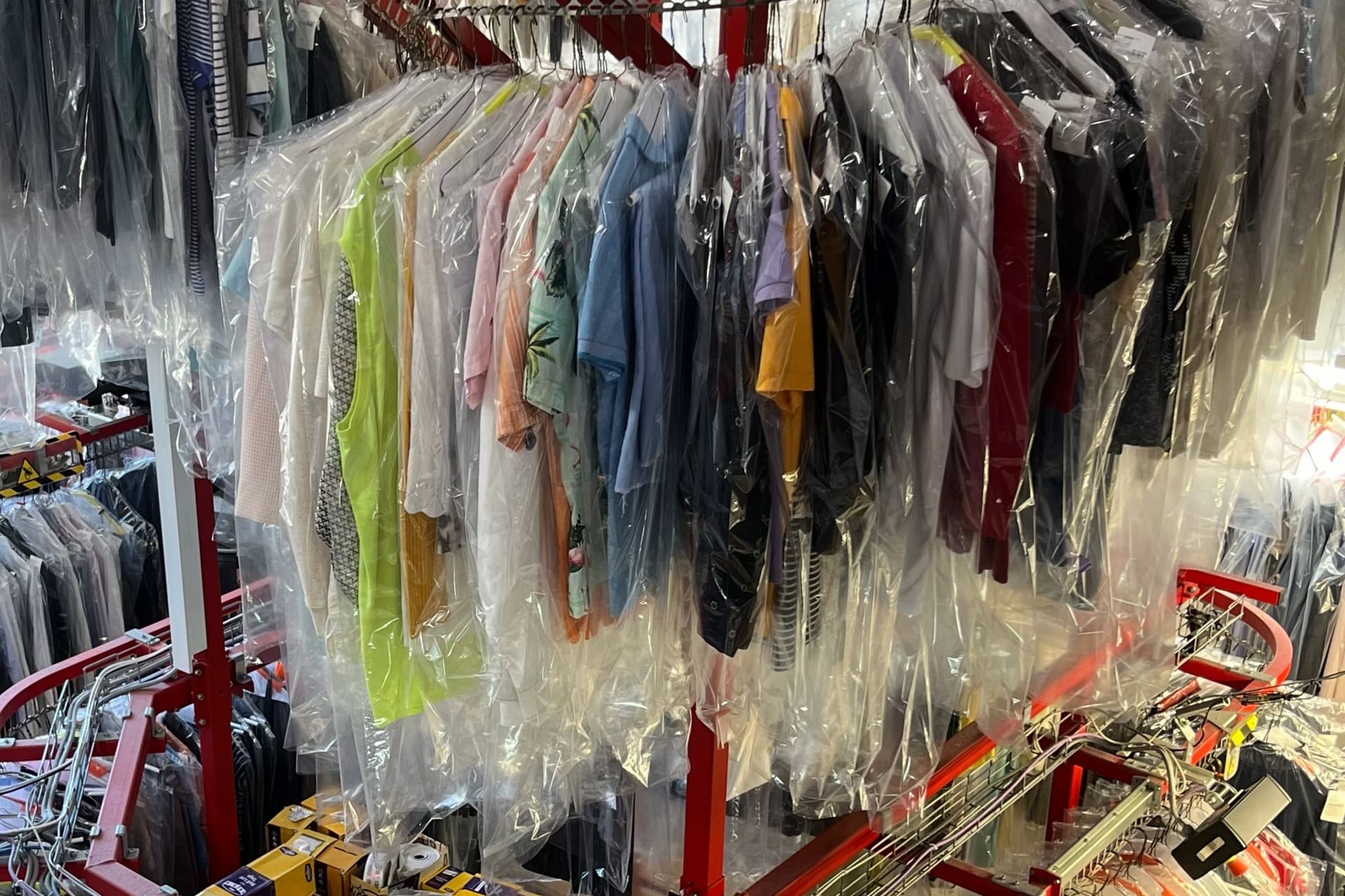
Finished garments are covered in protective plastic and returned on hangers. Remove the plastic as soon as you get home. Garments stored under plastic trap moisture over time, which can cause yellowing or mildew on natural fibers.
Check each piece at the counter before you leave. If a stain was not fully removed or if something does not look right, say so while the cleaner can still examine the garment directly. A reputable cleaner will work with you to make it right.
Before you go:
At drop-off:
At pickup:
Walking into a dry cleaner for the first time does not have to feel uncertain. Knowing what to bring, what to say, and what the process looks like removes most of the guesswork before you ever open the door.
Geneva Cleaners has been serving Geneva, Batavia, and St. Charles for over 50 years. The team handles everything from everyday dry cleaning and shirt service to wedding dress preservation, drapery cleaning, alterations, and fire restoration. With same-day service, express bag drop-off, and car hop drive-up options, getting professional results does not require rearranging your schedule.
Stop in or reach out, and the team will walk you through every step. The first drop-off is the hardest part, and it turns out to be the easiest thing you've done all week.
Phone: +1 331-322-0179
Location: Geneva, IL – also serving Batavia and St. Charles