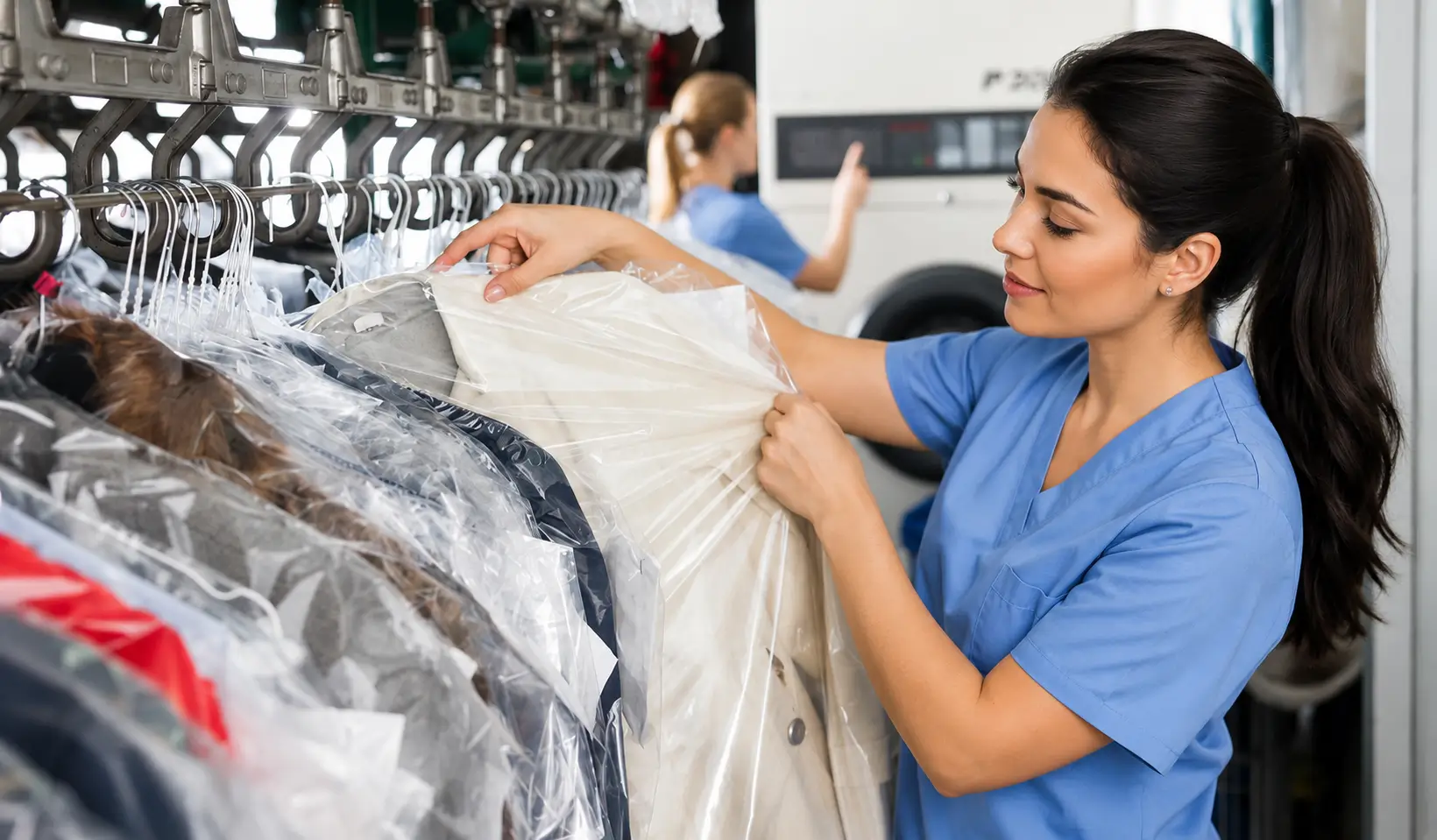
We are seeing a lot of care labels that are generic and only give one form of cleaning. Under the FTC Care Labeling Rule, manufacturers only need to list one safe cleaning method, not the best or only cleaning method. That’s why the same cotton shirt sold under two different labels might have completely different care instructions. Treating every item in your closet like it’s fragile gets expensive fast, and most of the time it’s unnecessary.
But some garments are more sensitive to water, agitation, heat, or improper cleaning and may need professional care. The safest method depends on the care label, fiber content, dyes, construction, and trims. Guidance from the Drycleaning & Laundry Institute (DLI) informs much of the fabric-specific advice below. This guide covers which garments often benefit from professional cleaning, what can go wrong with improper care, and what to check before cleaning them.
A tailored jacket isn’t just fabric. Canvas or fusible interfacing underneath gives the chest, lapels, and shoulders their shape, and that’s what makes a blazer look sharp instead of shapeless.
Because a structured jacket contains more than its outer fabric, washing it without checking the care instructions can affect its shape, interfacing, lining, or other components. Professional cleaners consider the entire garment’s construction before choosing an appropriate cleaning method.
This is especially important with bonded or fusible interfacings, which can sometimes separate and create bubbling or distortion. Follow the care label and let a professional cleaner assess the jacket if you’re unsure which cleaning method is safe.
How often: Clean suits and blazers according to the care label and when they become stained or soiled. Dirt, perspiration, body oils, and other soils should not be allowed to remain in the garment unnecessarily.
Silk is one of the more delicate fabrics in your wardrobe. According to DLI, silk generally responds best to professional dry cleaning, while washing it at home can sometimes cause shrinkage, fading, dye bleeding, loss of shape, or changes in texture.
Ties also require careful handling because their fabric, construction, finishes, and bias cut can make them susceptible to distortion or puckering.
Always check the garment’s care label first, including on silk labeled as washable, and ask a professional cleaner if you’re uncertain about the safest method.
How often: Rather than relying on a fixed number of wears, clean silk garments promptly when they are stained or soiled and follow their care instructions.
Silk is sensitive to moisture and friction. Water, perspiration, household products, and rubbing a wet area can affect the fabric’s color, texture, or appearance.
That’s why DLI recommends blotting rather than rubbing a spill, avoiding heat, and bringing the garment to a professional cleaner as soon as possible.
Wool, cashmere, and other fine knits require careful cleaning because the appropriate method varies by garment. Some are designed for dry cleaning, while others may be hand or machine washable.
The care label should be your first guide. Fiber content alone does not tell you everything about how a garment should be cleaned because construction, dyes, trims, and finishes can also affect the appropriate method.
If a wool or cashmere garment is labeled for professional cleaning, or you are uncertain about how it will respond to water, ask a professional cleaner before trying another method.
How often: Clean these garments according to their care instructions and when they become stained or soiled rather than relying on a fixed cleaning schedule.
Gowns and formalwear can combine several challenges at once: delicate fabric, structural elements, and embellishments such as beads, sequins, embroidery, or appliqué.
That does not mean every gown should automatically be dry cleaned. Industry guidance from the Drycleaning & Laundry Institute (DLI) warns that bead coatings and certain plastics used in embellishments aren't always resistant to dry cleaning solvents, which is why some formal and embellished garments carry “spot clean only” labels instead of standard dry-clean instructions.
This is why professional inspection matters. A garment care professional can evaluate the fabric, construction, care label, and embellishments before determining the safest cleaning method.
How often: Wedding gowns should be professionally cleaned as soon as possible after the wedding. Other formalwear should be cleaned according to its care instructions and after staining or significant soiling.
Food, beverages, body oils, perspiration, and makeup can leave stains that aren't immediately obvious. DLI warns that stains left untreated can become harder to remove and may eventually cause permanent discoloration.
Point out every known spill or stain to your cleaner, even if you can barely see it.
These fabrics can be deceptive. Rayon and viscose can look and feel similar to other everyday fabrics, but DLI notes that most rayon is highly sensitive to water.
Moisture can cause certain rayon dyes to bleed or migrate, while water-soluble sizing can affect the garment’s original shape and drape. For this reason, DLI recommends dry cleaning for most rayon garments.
There are exceptions. Lyocell, which is a form of rayon, may be either washable or dry cleanable depending on the garment. Follow the care instructions carefully rather than assuming all rayon-family fabrics require the same method.
How often: Follow the care label and have the garment cleaned when it becomes stained or soiled rather than using a fixed number of wears.
Leather and suede aren’t ordinary fabrics. They are made from animal hides and require specialized cleaning procedures.
DLI warns that attempting to clean leather at home or using an improper method can cause permanent damage. Because every hide is different, leather can also experience natural changes in color, texture, drape, or fit during professional cleaning.
A water-resistant finish does not mean a leather or suede garment can safely go through an ordinary home wash.
Professional leather care uses specialized procedures designed to remove soil while maintaining the garment’s suppleness, color, texture, and finish as much as possible.
That’s why leather cleaning is treated as its own specialty, separate from standard dry cleaning, at most professional cleaners.
How often: Have leather and suede professionally cleaned when needed and follow any care instructions provided with the garment.
Older garments often use fabrics, dyes, trims, and construction methods that can behave unpredictably during cleaning. Age itself can also weaken fibers and construction even when a garment appears intact.
The risk isn’t really the fabric type; it’s that you often don’t know how the entire garment will respond to cleaning. A professional cleaner can inspect an older or heirloom piece and determine an appropriate care approach before cleaning begins.
Not every garment in your closet needs to be dry cleaned. Many everyday garments are designed to be machine washed or hand washed, and the care label is the best place to start.
Cotton shirts, denim, and many synthetic garments are commonly washable when their care labels permit it. But fiber content alone should not be used to override a “Dry Clean Only” instruction.
Construction, colorfastness, trims, interfacings, linings, and finishes can all influence which cleaning process is safe. If you want to use a different method from the one listed on the label, ask a professional cleaner to assess the garment first.
Saving professional care for garments that need it makes sense, but the decision should be based on the care label and the garment itself rather than the fiber name alone.
Geneva Cleaners is where Geneva, Illinois customers bring the garments they can’t afford to wash incorrectly. Structured tailoring, silk, fine wool, leather, and heirloom pieces all receive the same thing: an honest assessment before any work begins, and professional dry cleaning that’s appropriate for the fabric rather than generic.
Drop off your items today or call us and let our team take it from here.